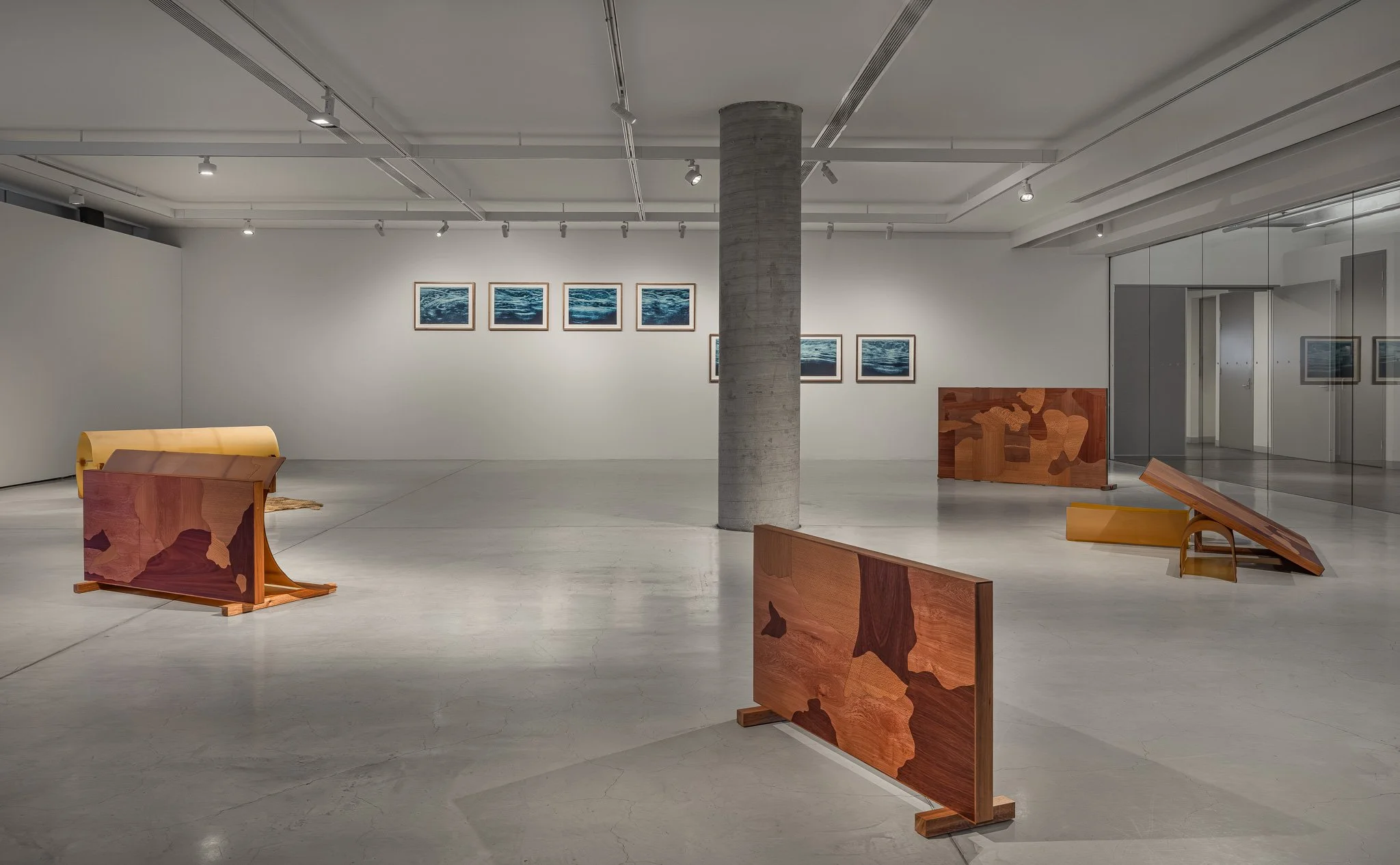
A river runs through, 2026, install view. Photo: Jacquie Manning
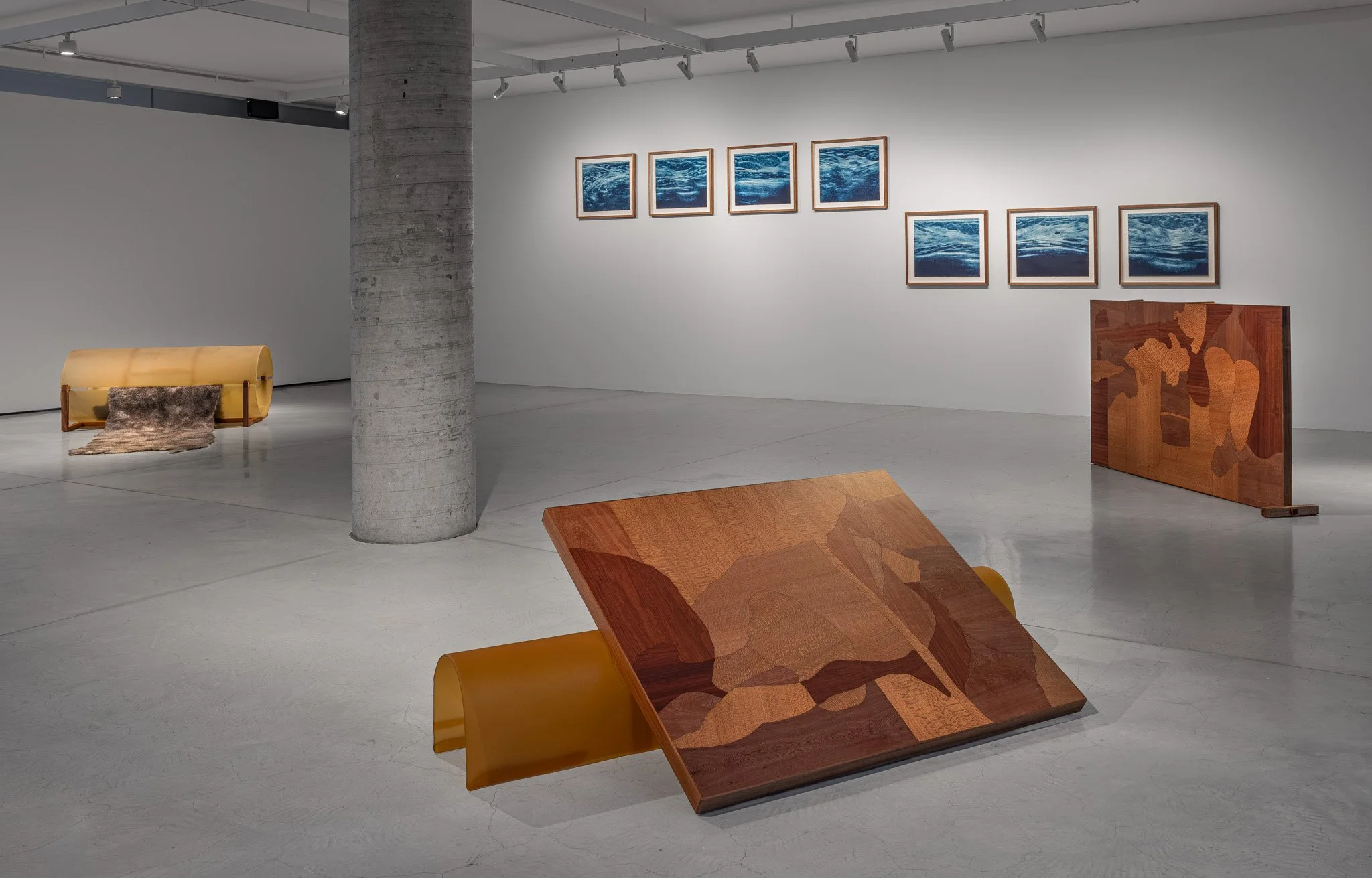
A river runs through, 2026, install view. Photo: Jacquie Manning
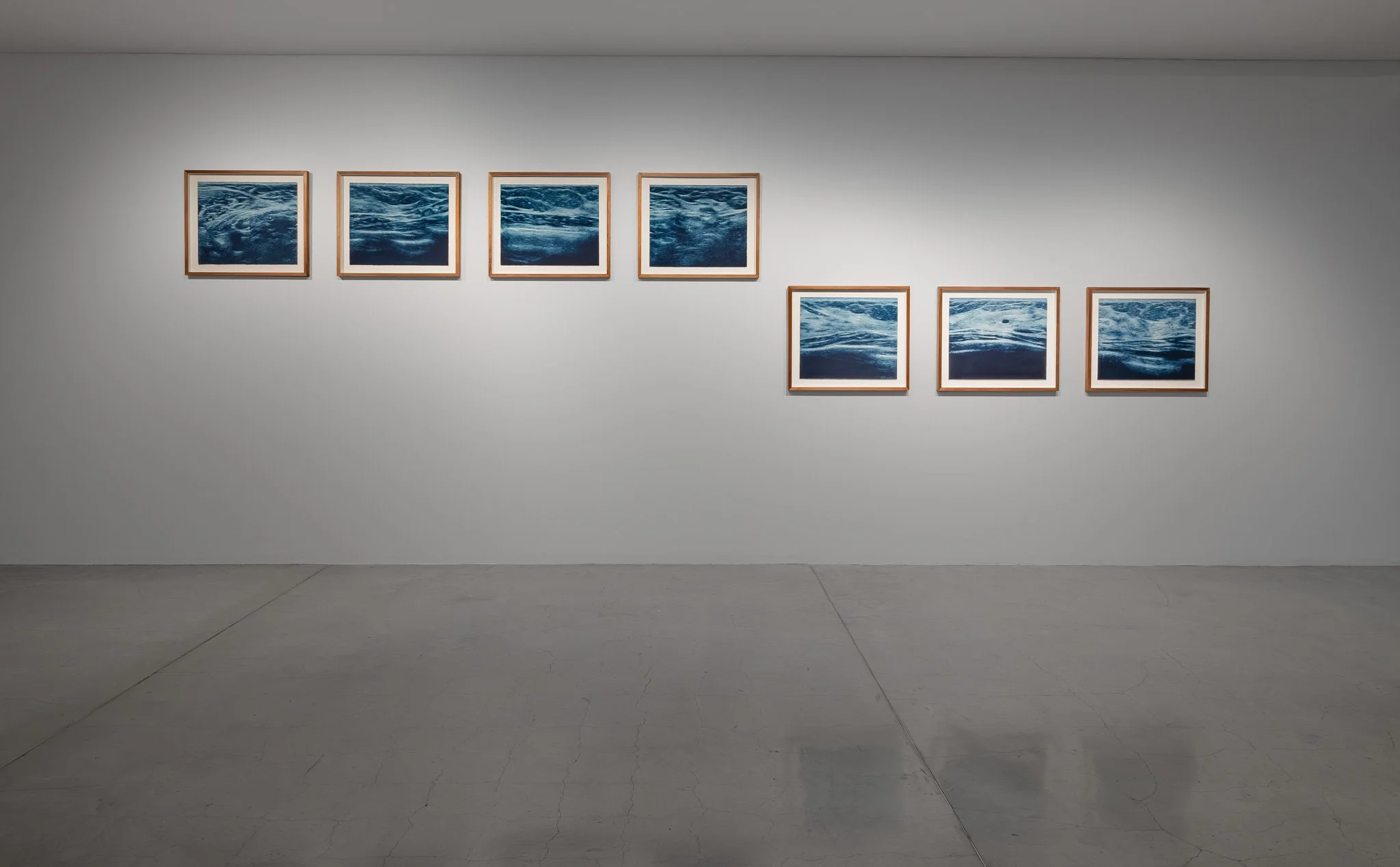
Hiddener abode I–VII, 2026, photopolymer photogravure on 300gsm satin white paper 7–parts, 500 × 600mm (each, unframed). Photo: Jacquie Manning
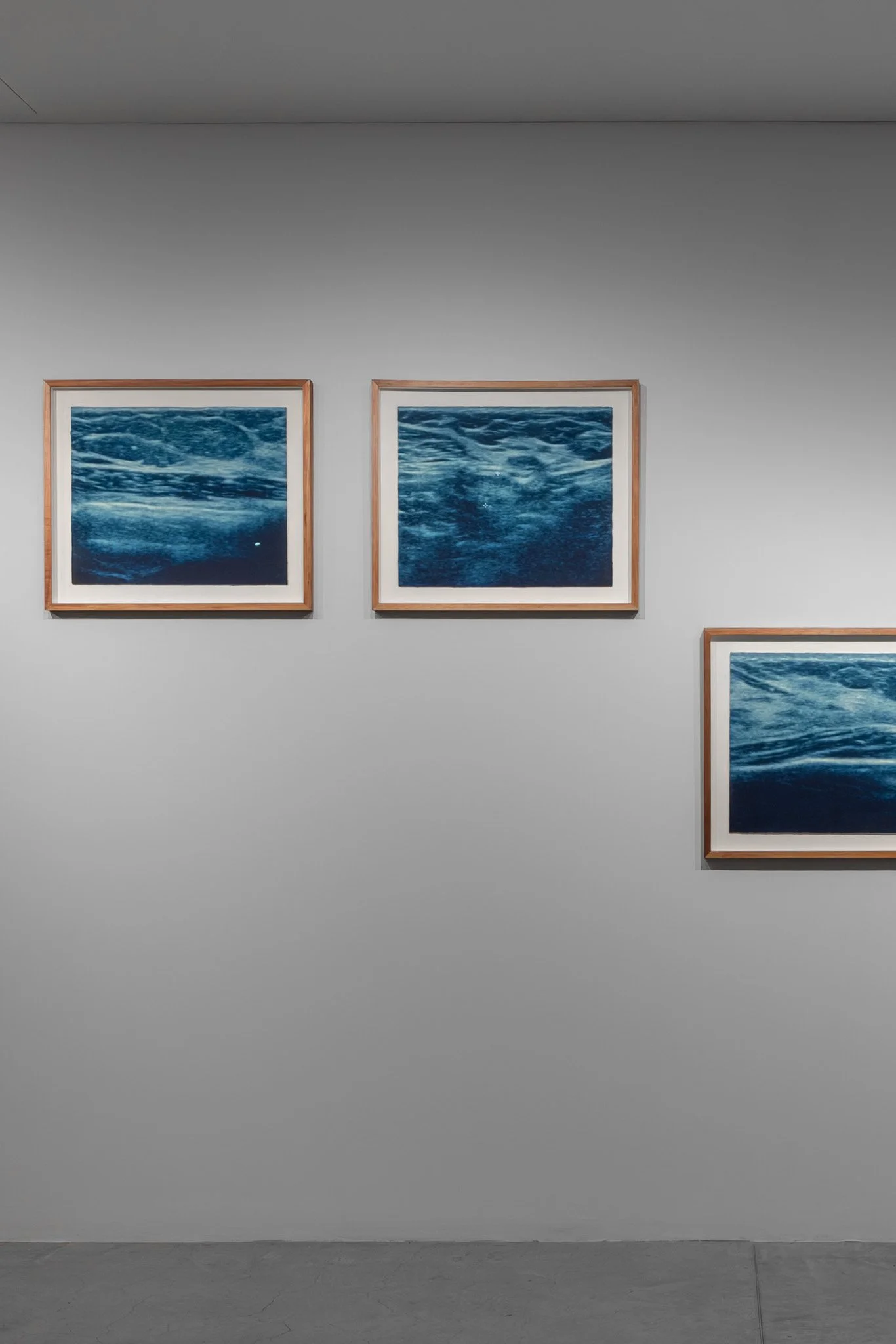
Hiddener abode I–VII (detail), 2026, photopolymer photogravure on 300gsm satin white paper 7–parts, 500 × 600mm (each, unframed). Photo: Jacquie Manning
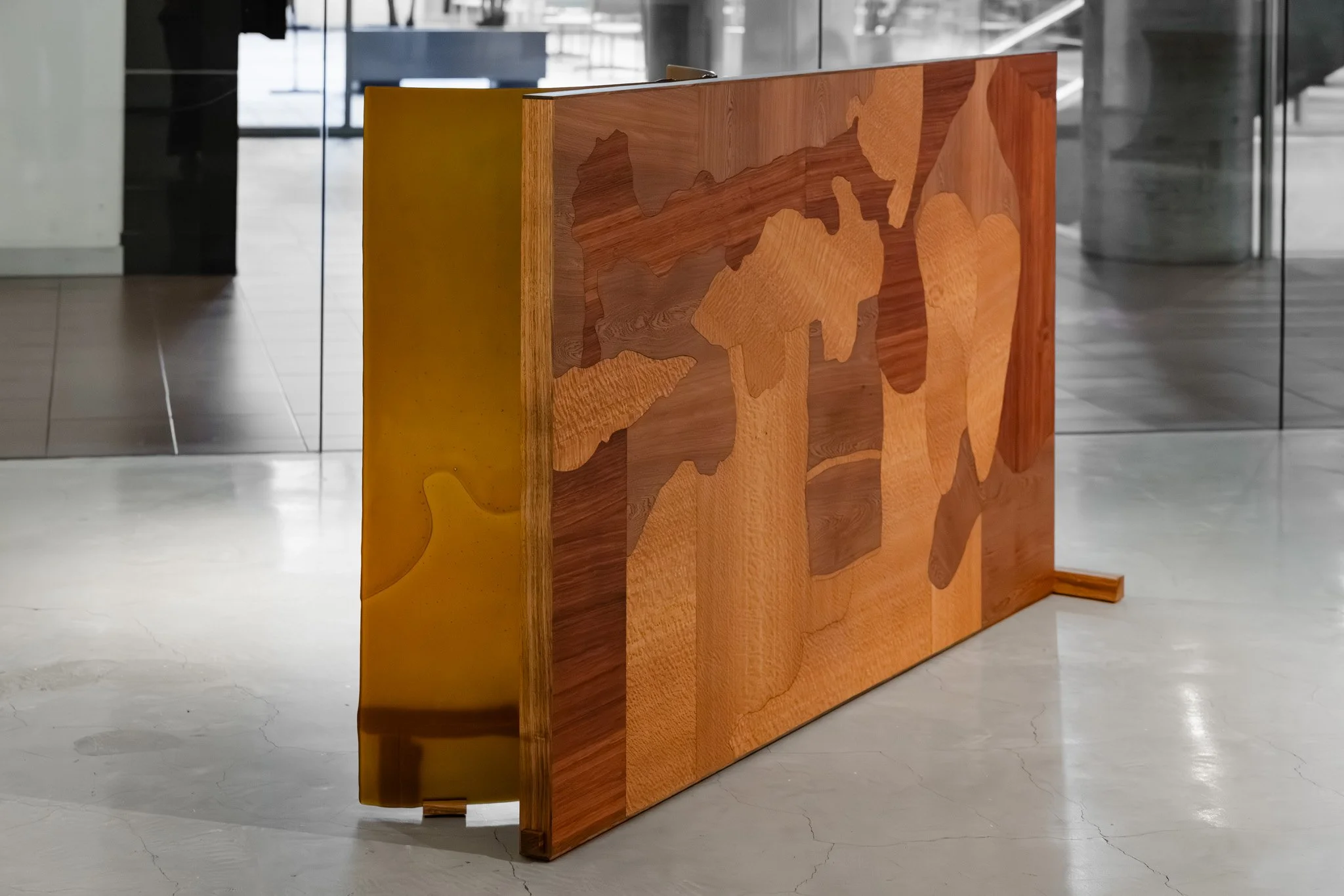
False antithesis I, 2026, kiln formed glass, timber marquetry (coachwood, silky oak, jarrah), blackwood, dimensions variable. Photo: Jacquie Manning
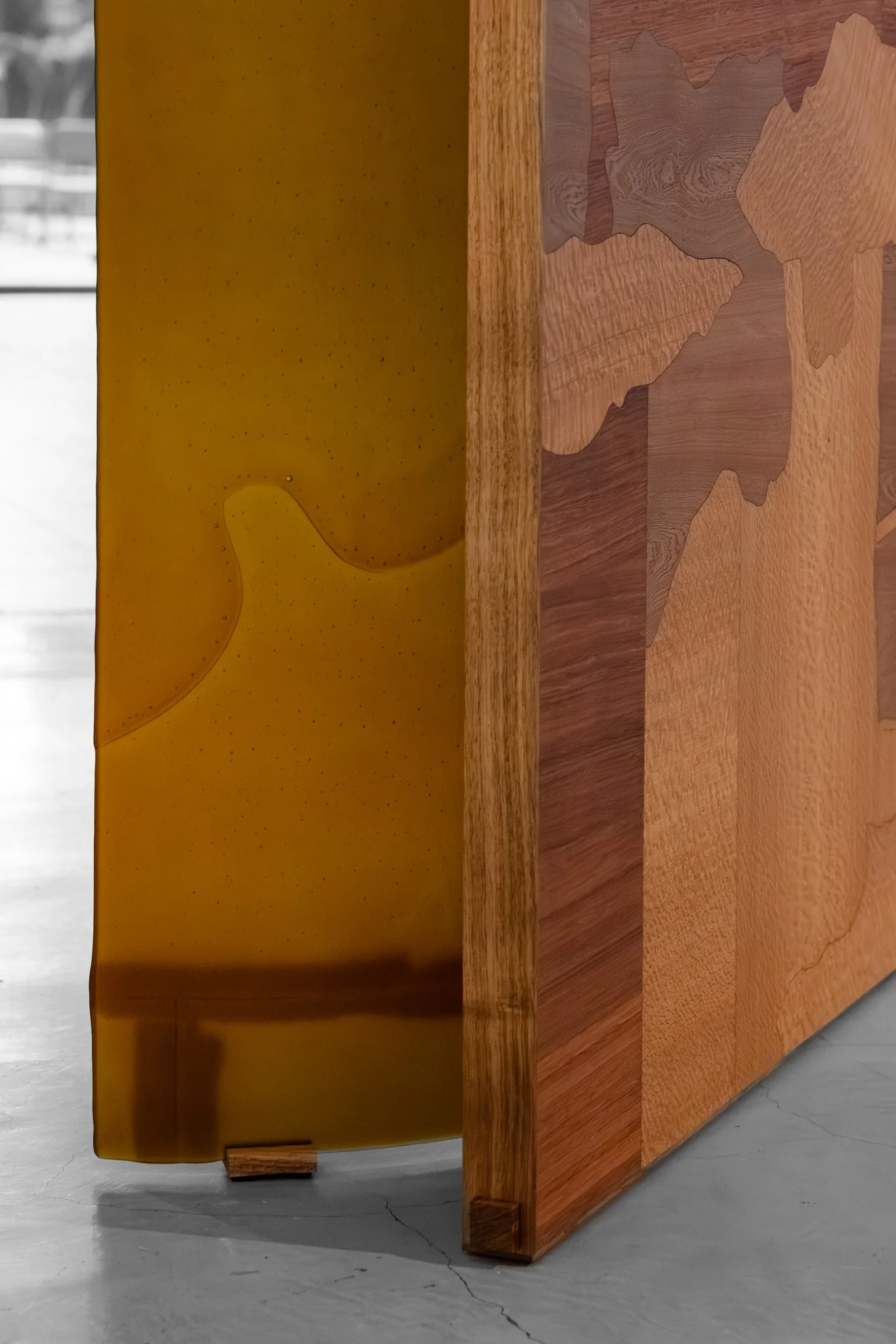
False antithesis I (detail), 2026, kiln formed glass, timber marquetry (coachwood, silky oak, jarrah), blackwood, dimensions variable. Photo: Jacquie Manning
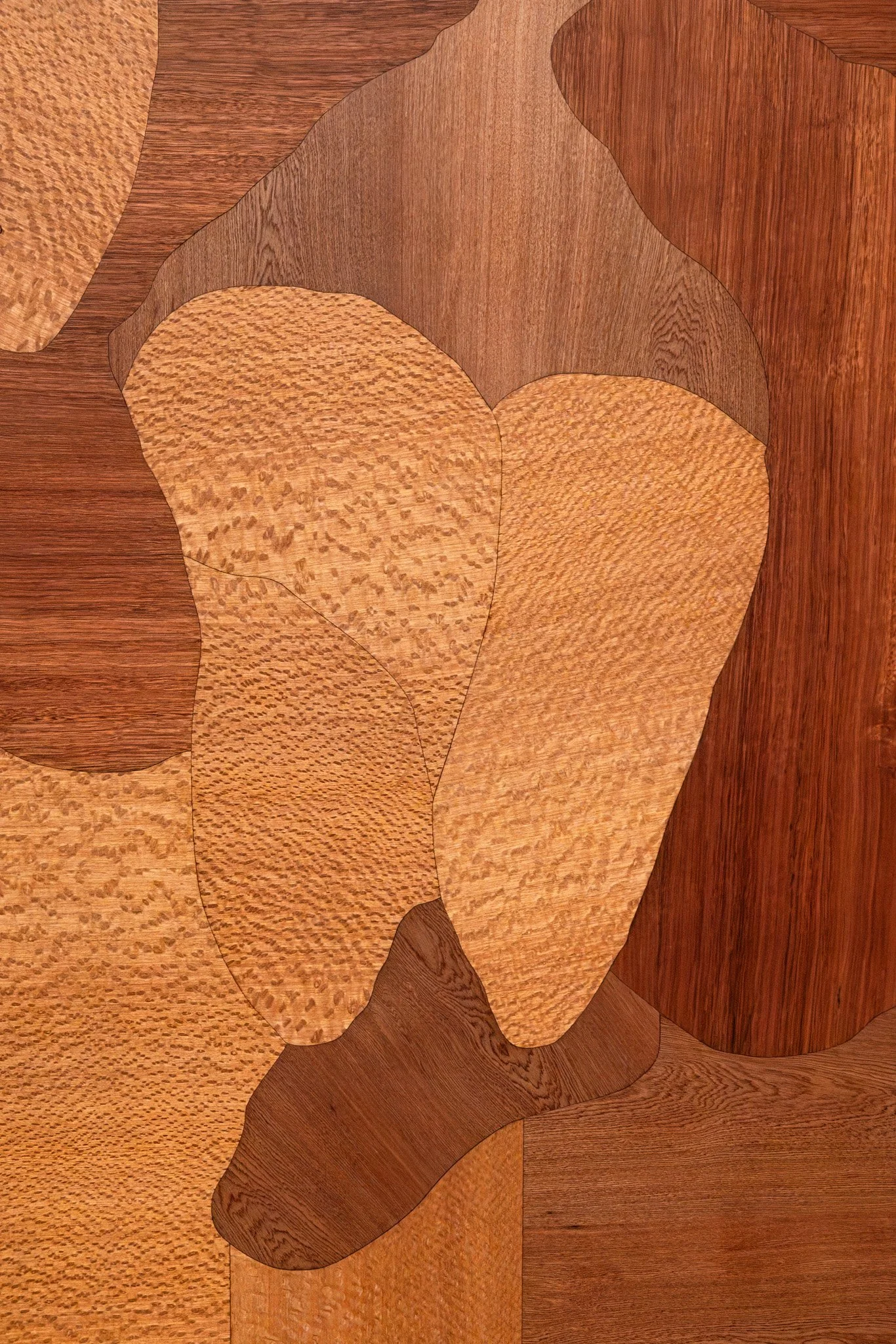
False antithesis I (detail), 2026, kiln formed glass, timber marquetry (coachwood, silky oak, jarrah), blackwood, dimensions variable. Photo: Jacquie Manning
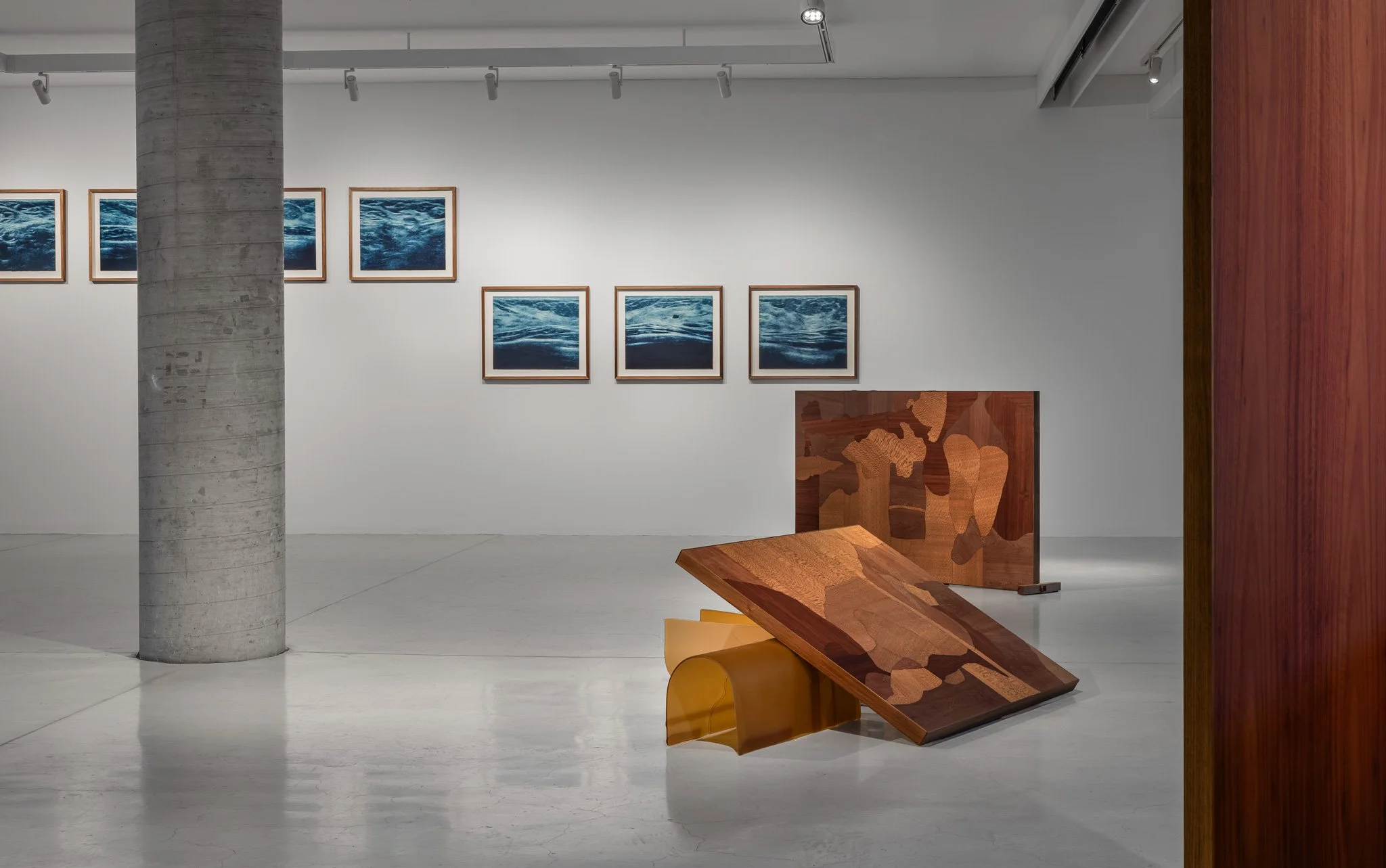
A river runs through, 2026, install view. Photo: Jacquie Manning
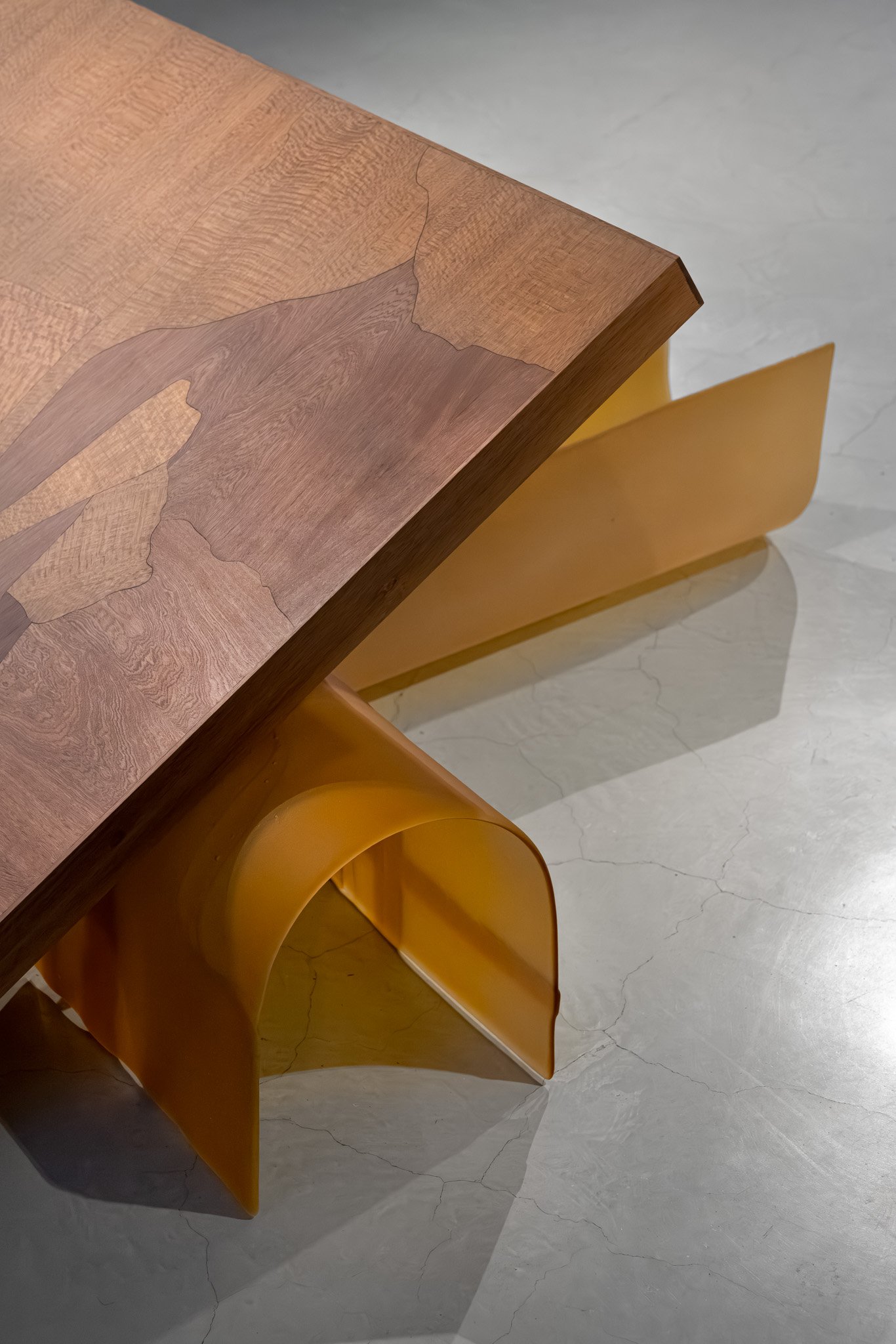
False antithesis IV (detail), 2026, kiln formed glass, timber marquetry (coachwood, silky oak, jarrah), blackwood, dimensions variable. Photo: Jacquie Manning
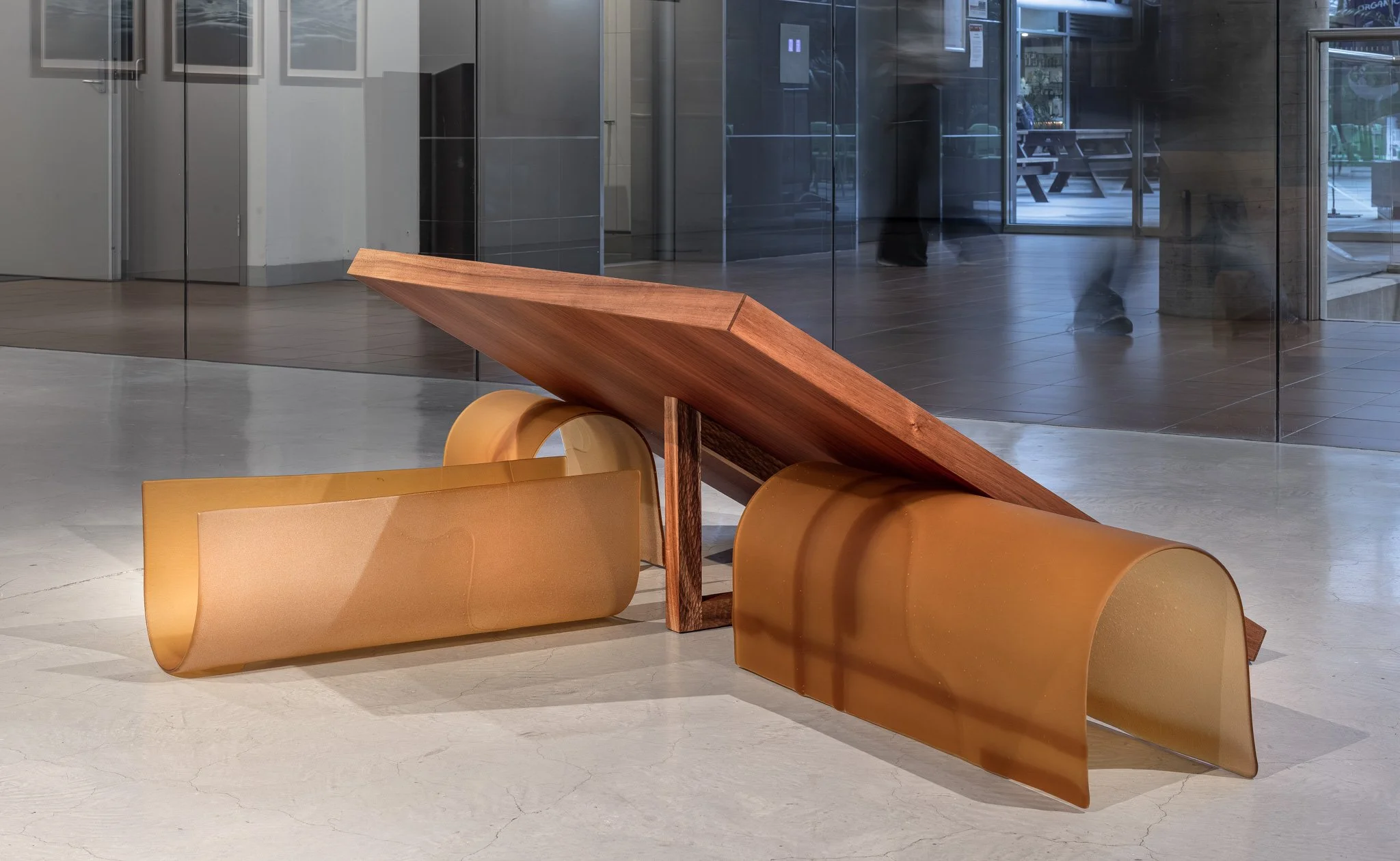
False antithesis IV, 2026, kiln-formed glass, timber marquetry (coachwood, silky oak, jarrah), blackwood, dimensions variable. Photo: Jacquie Manning
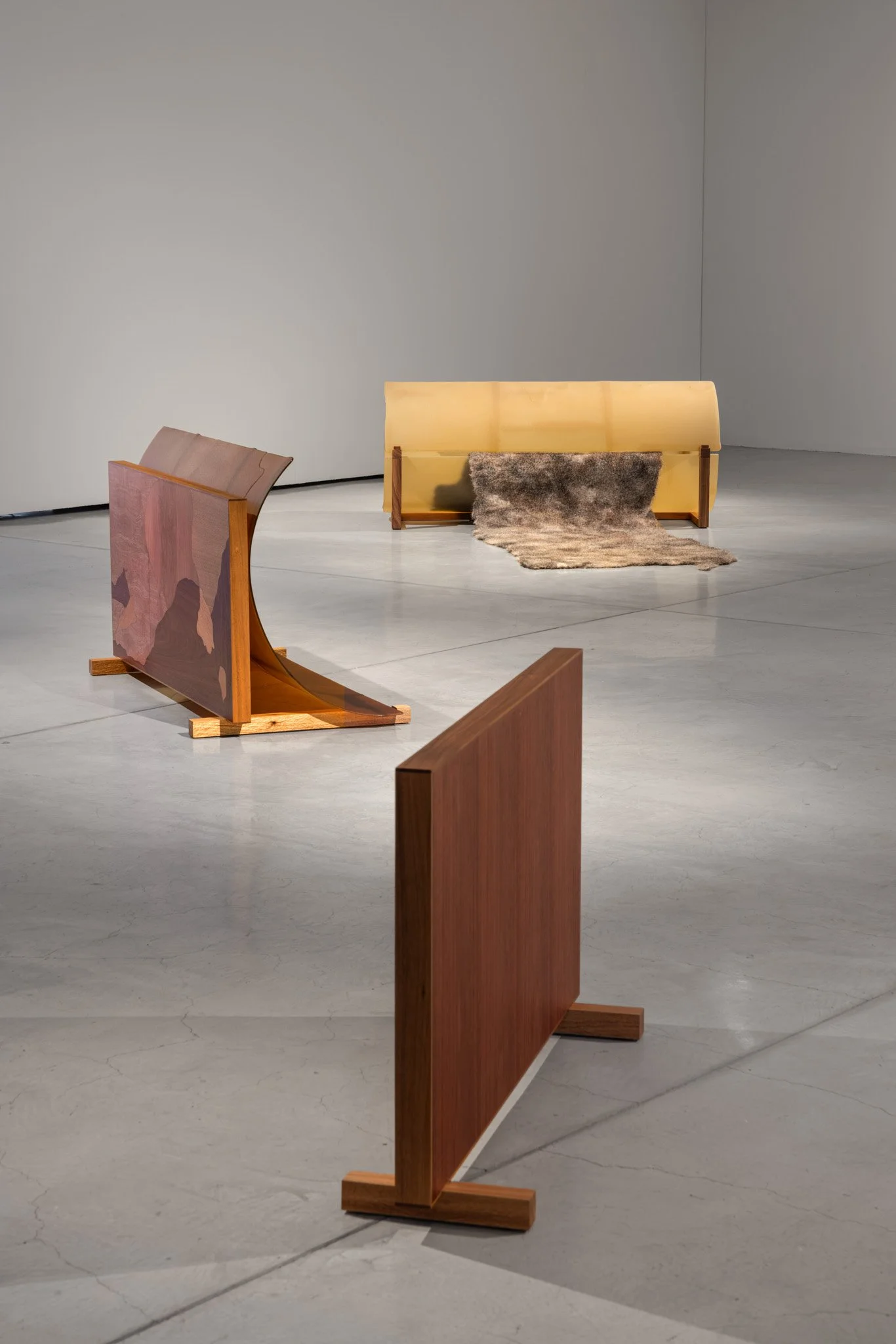
False antithesis II and V-I and V-II, 2026, kiln-formed glass, timber marquetry (coachwood, silky oak, jarrah), blackwood, felted feral goat fibre, dimensions variable. Photo: Jacquie Manning
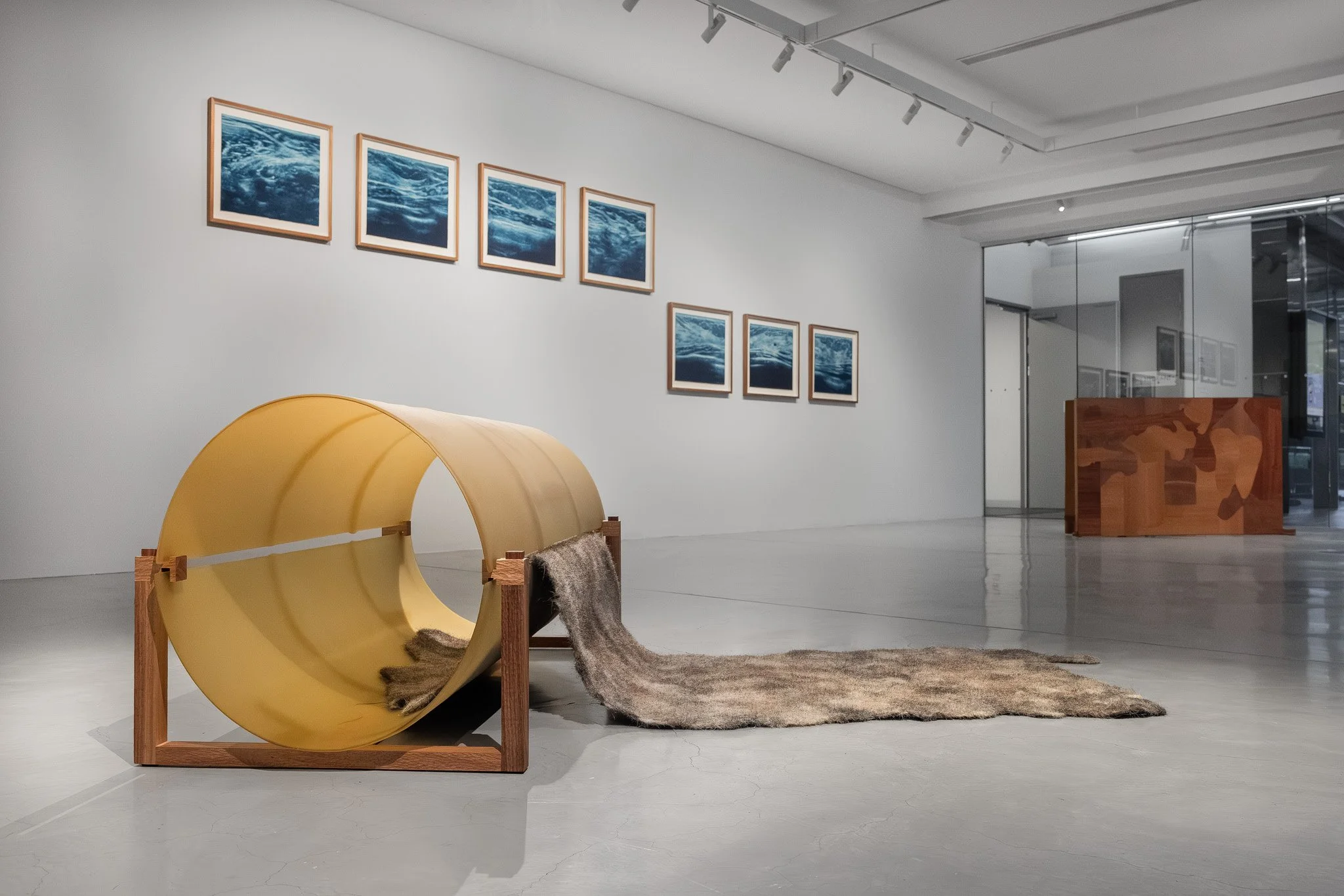
A river runs through, 2026, install view. Photo: Jacquie Manning
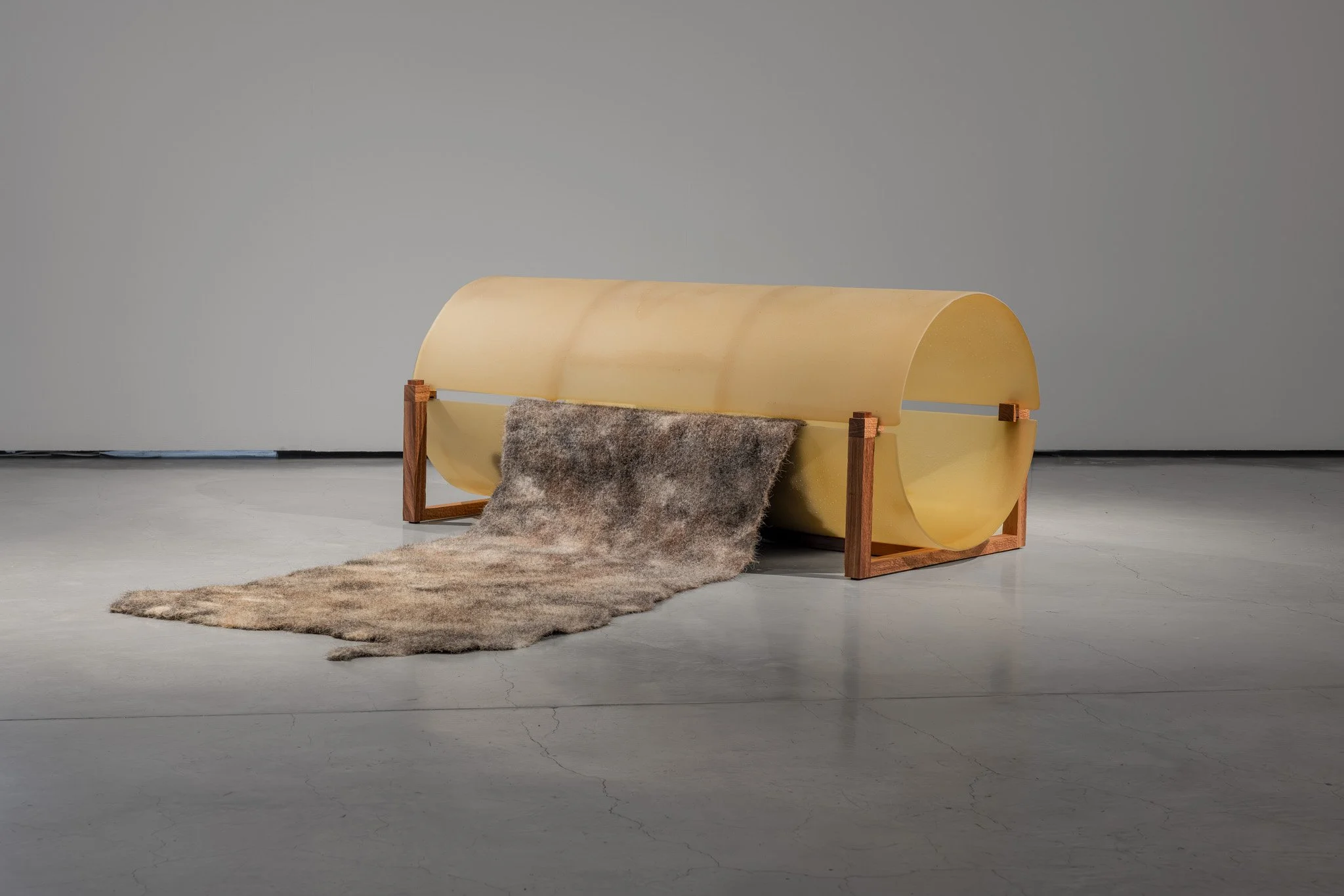
False antithesis II, 2026, kiln-formed glass, blackwood, felted feral goat fibre, dimensions variable. Photo: Jacquie Manning
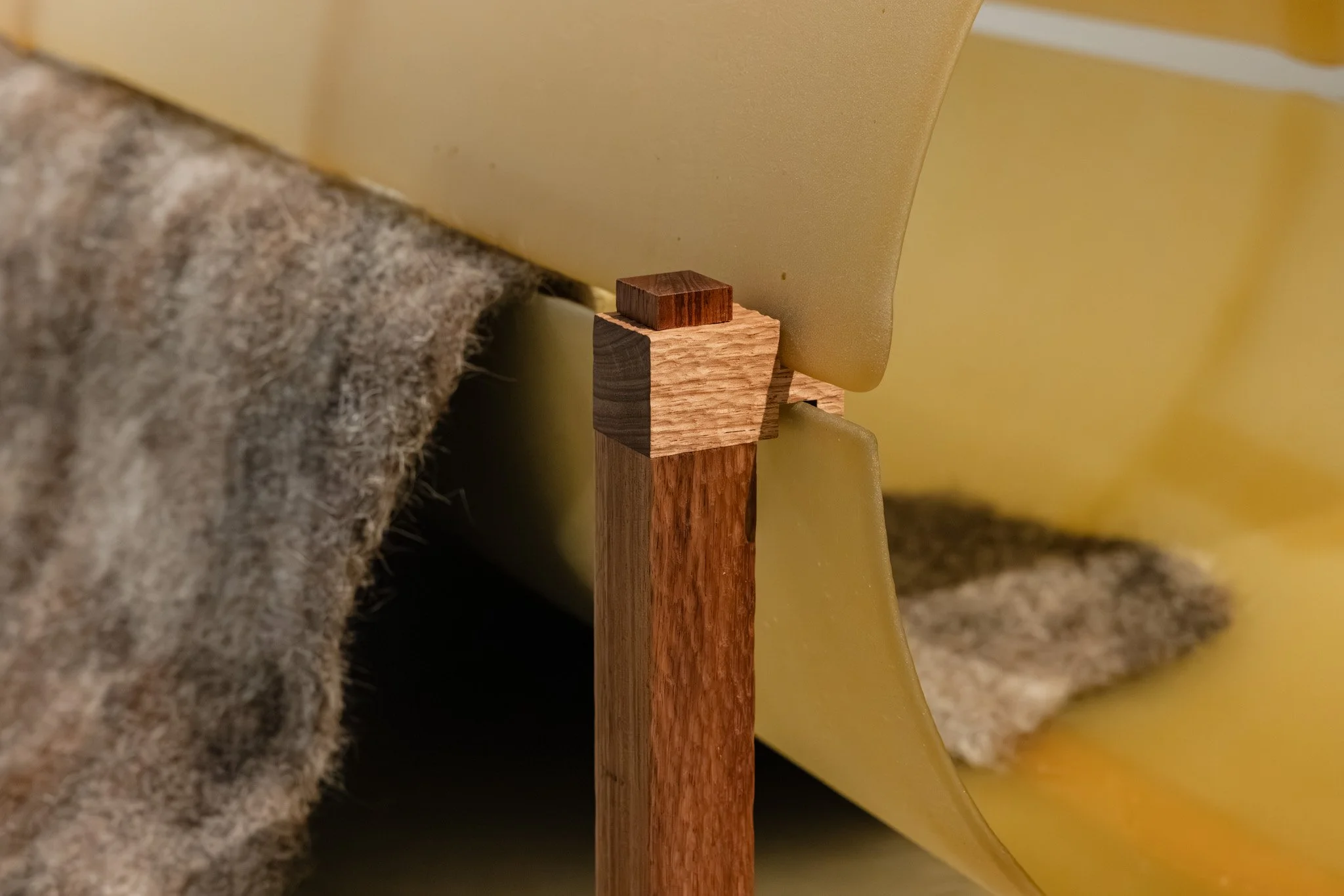
False antithesis II (detail), 2026, kiln-formed glass, blackwood, felted feral goat fibre, dimensions variable. Photo: Jacquie Manning
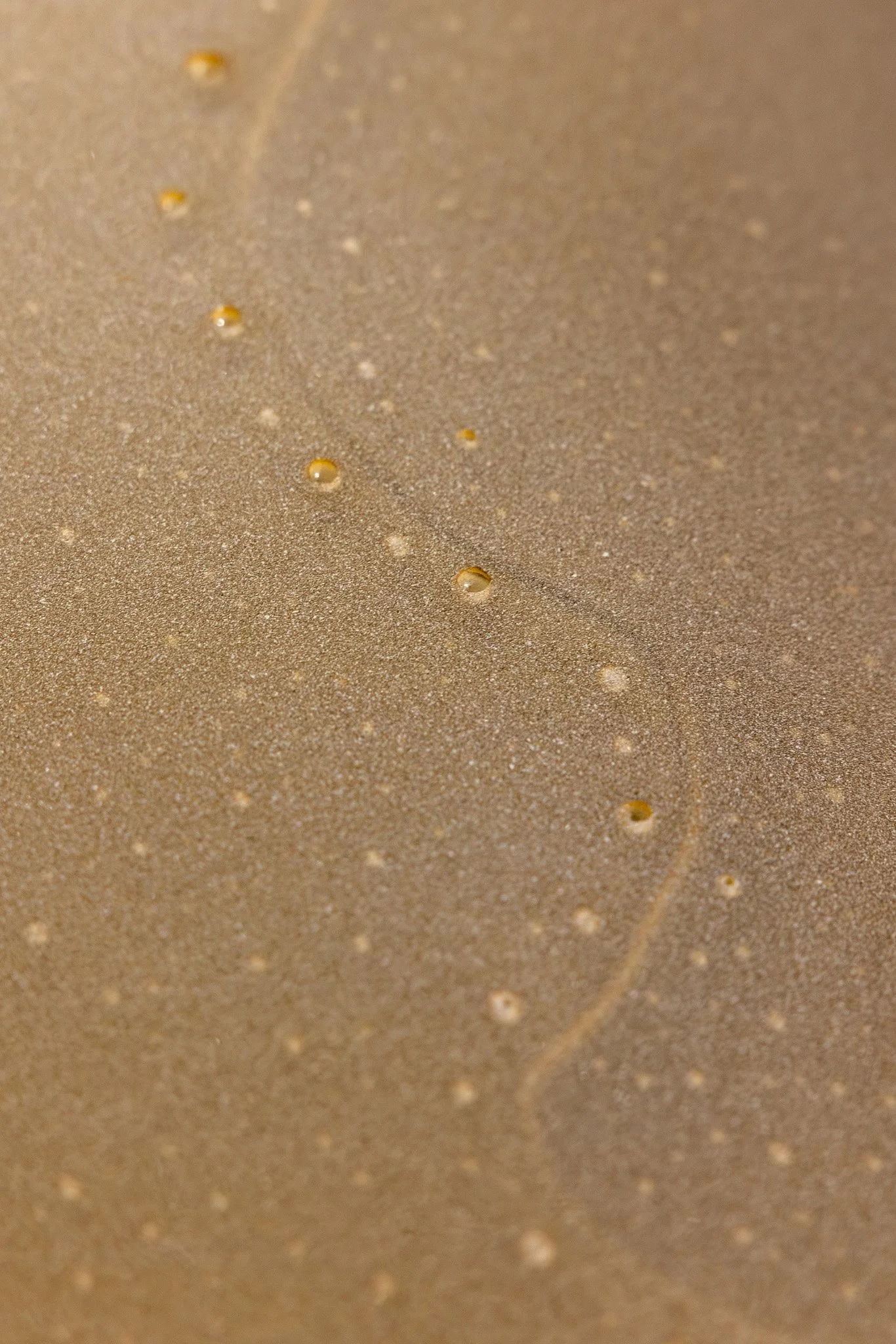
False antithesis II (detail), 2026, kiln-formed glass, blackwood, felted feral goat fibre, dimensions variable. Photo: Jacquie Manning
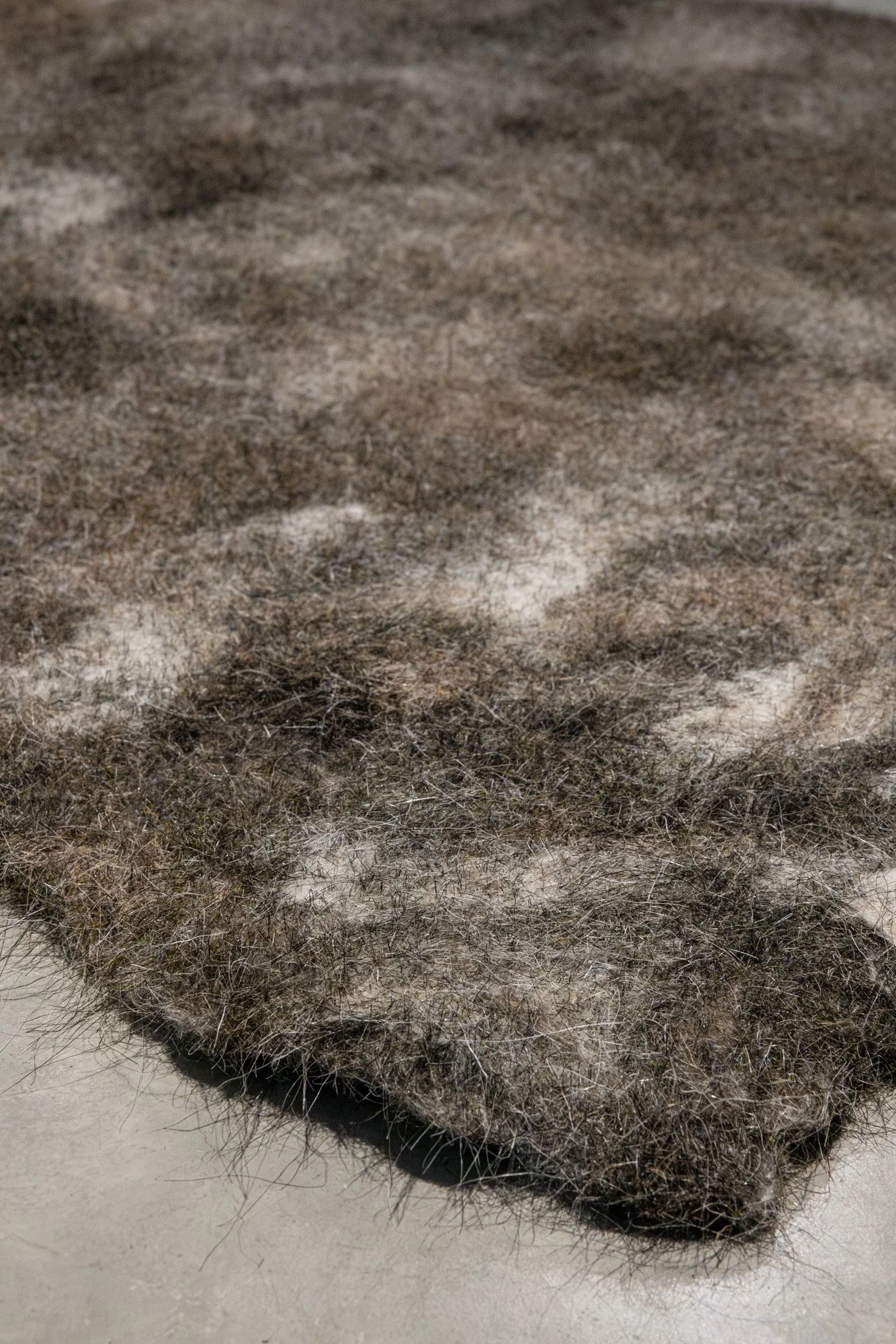
False antithesis II (detail), 2026, kiln-formed glass, blackwood, felted feral goat fibre, dimensions variable. Photo: Jacquie Manning
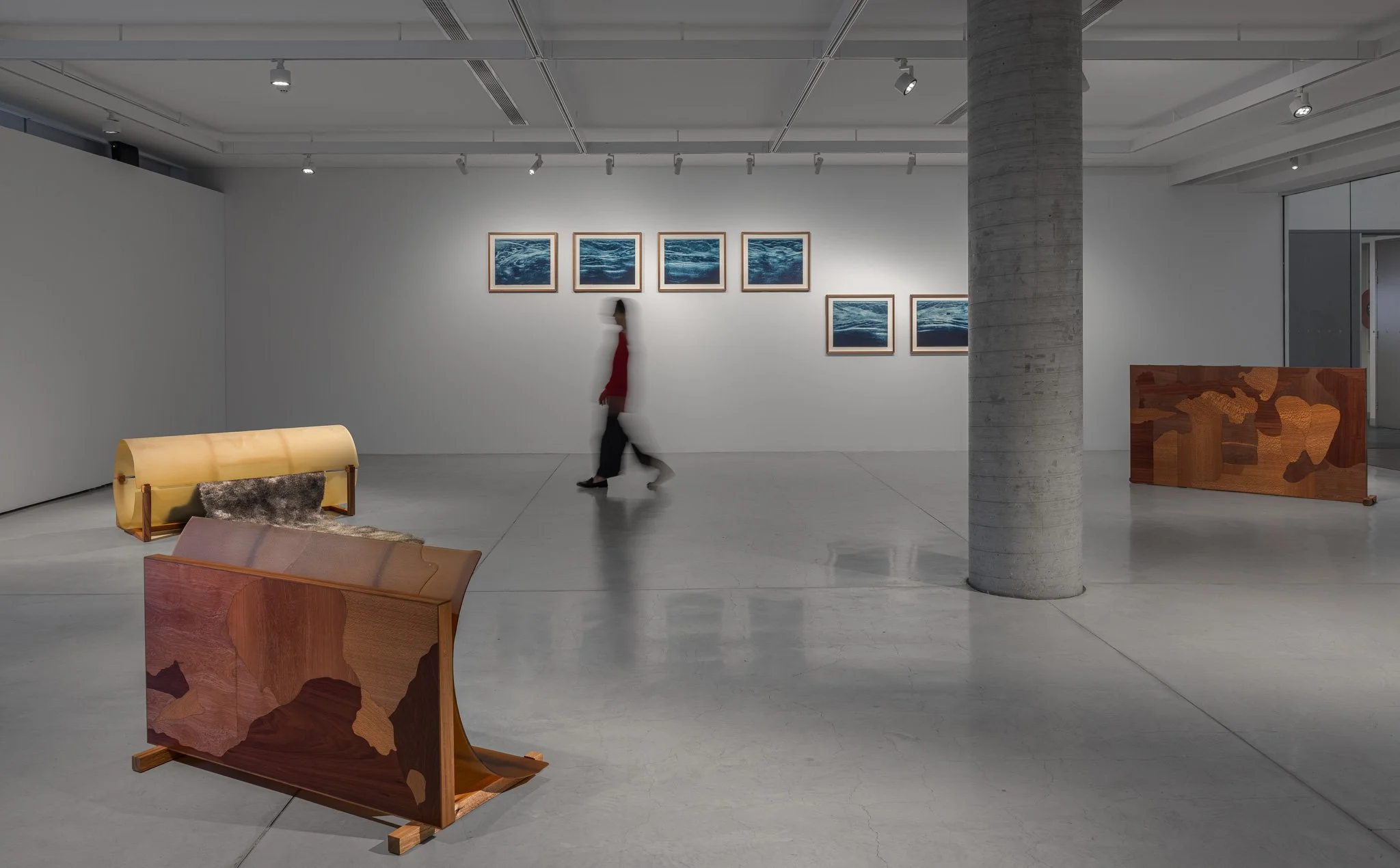
A river runs through, 2026, install view. Photo: Jacquie Manning
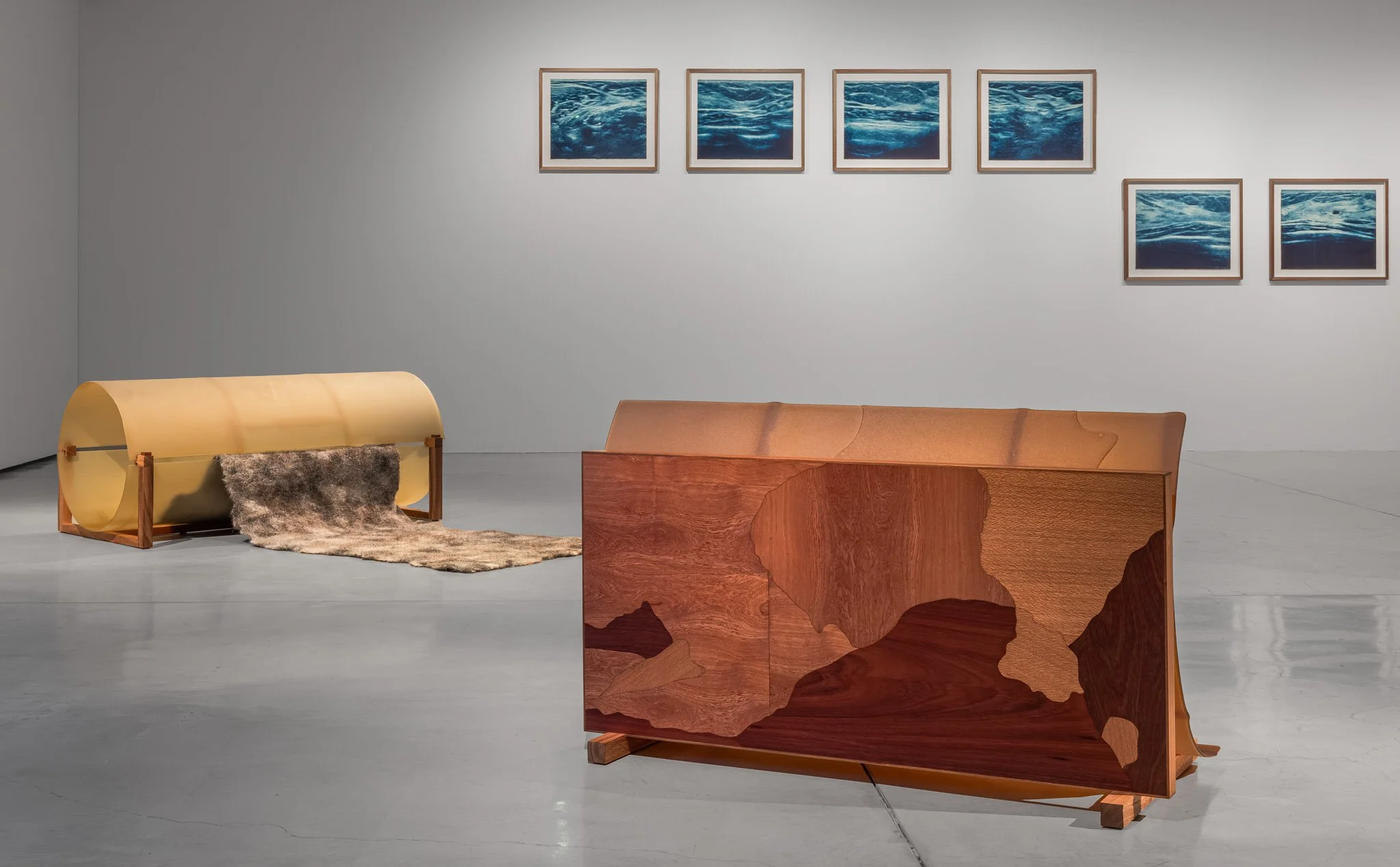
A river runs through, 2026, install view. Photo: Jacquie Manning
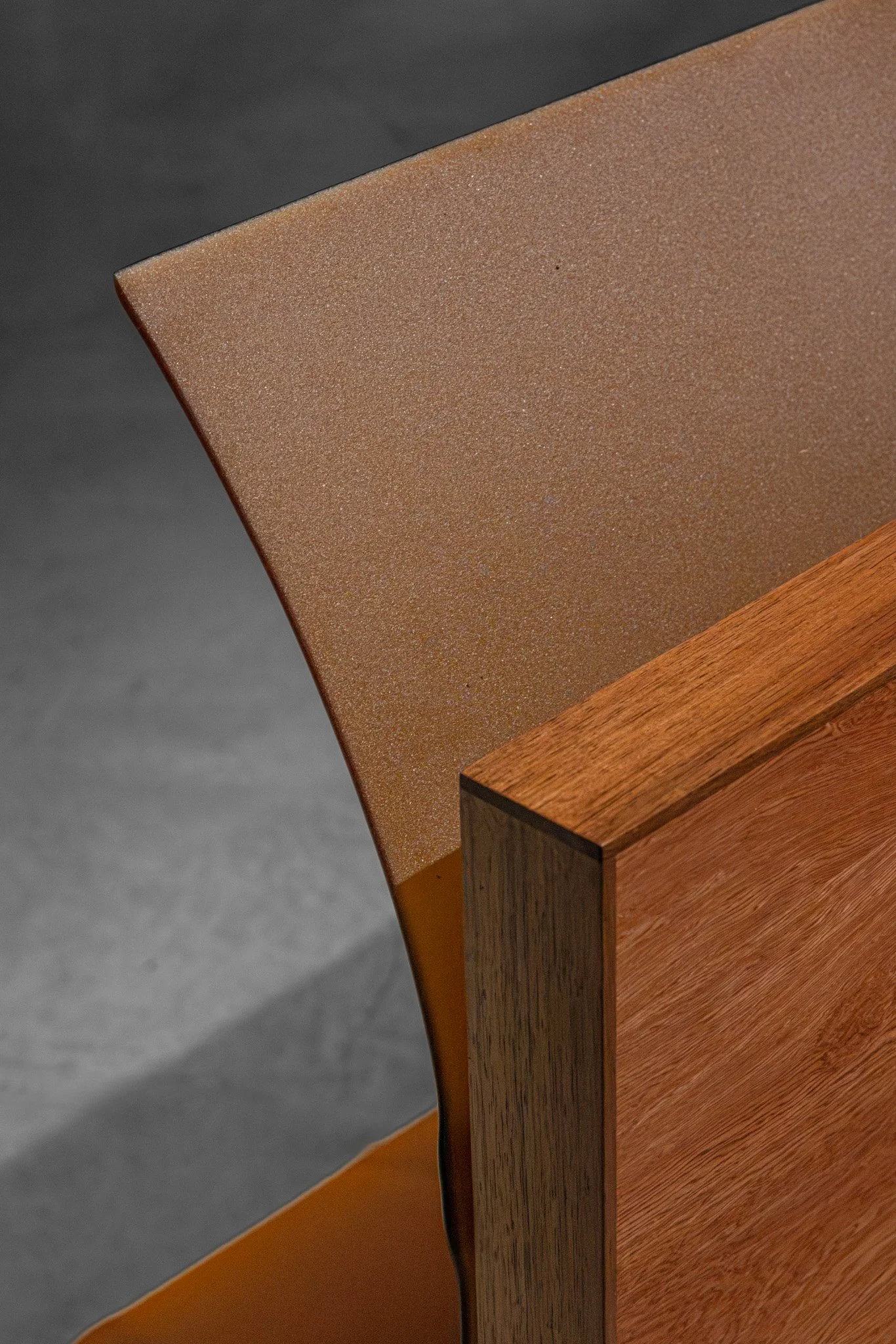
False antithesis V (detail), 2026, kiln formed glass, timber marquetry (coachwood, silky oak, jarrah), blackwood, dimensions variable. Photo: Jacquie Manning
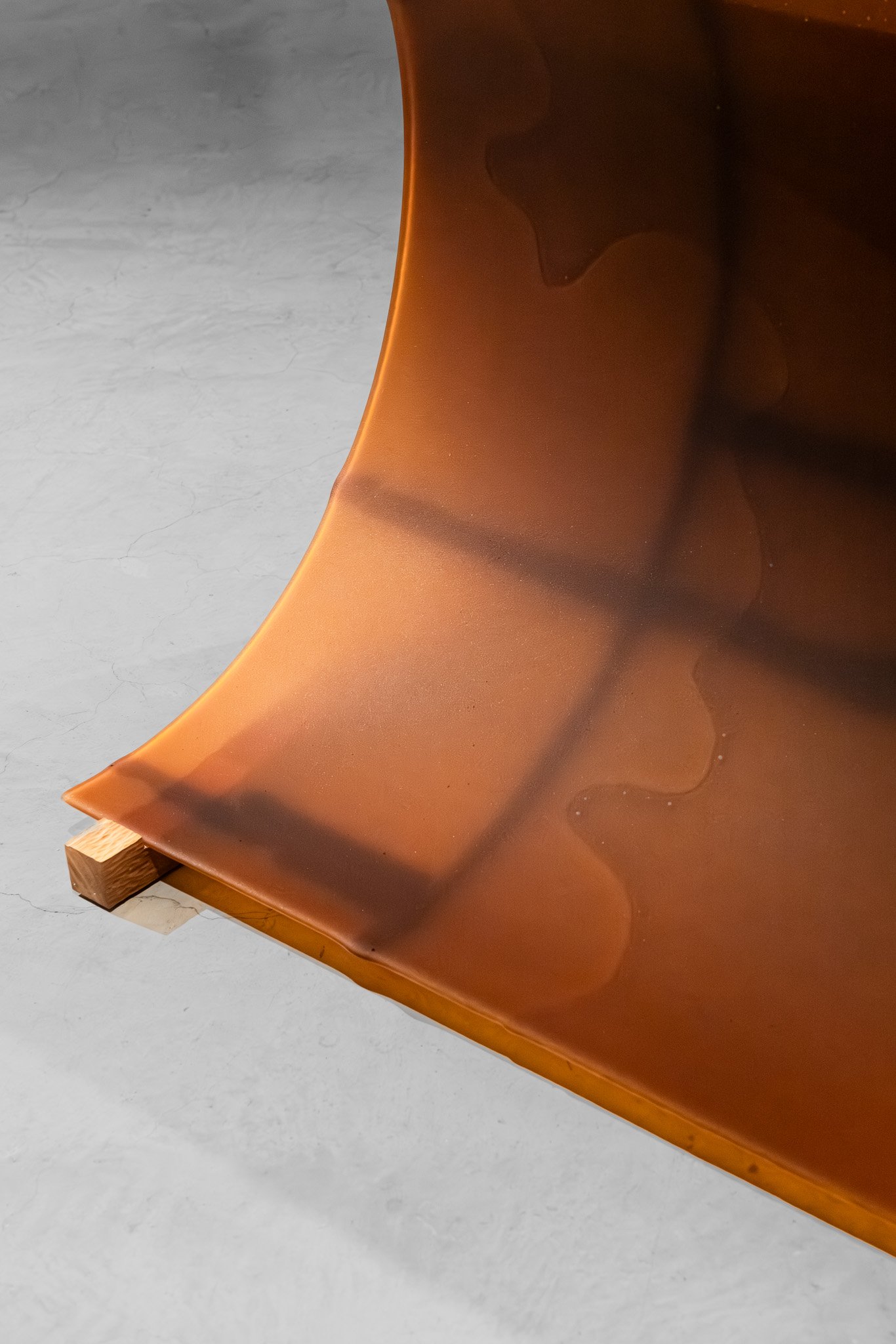
False antithesis V (detail), 2026, kiln formed glass, timber marquetry (coachwood, silky oak, jarrah), blackwood, dimensions variable. Photo: Jacquie Manning
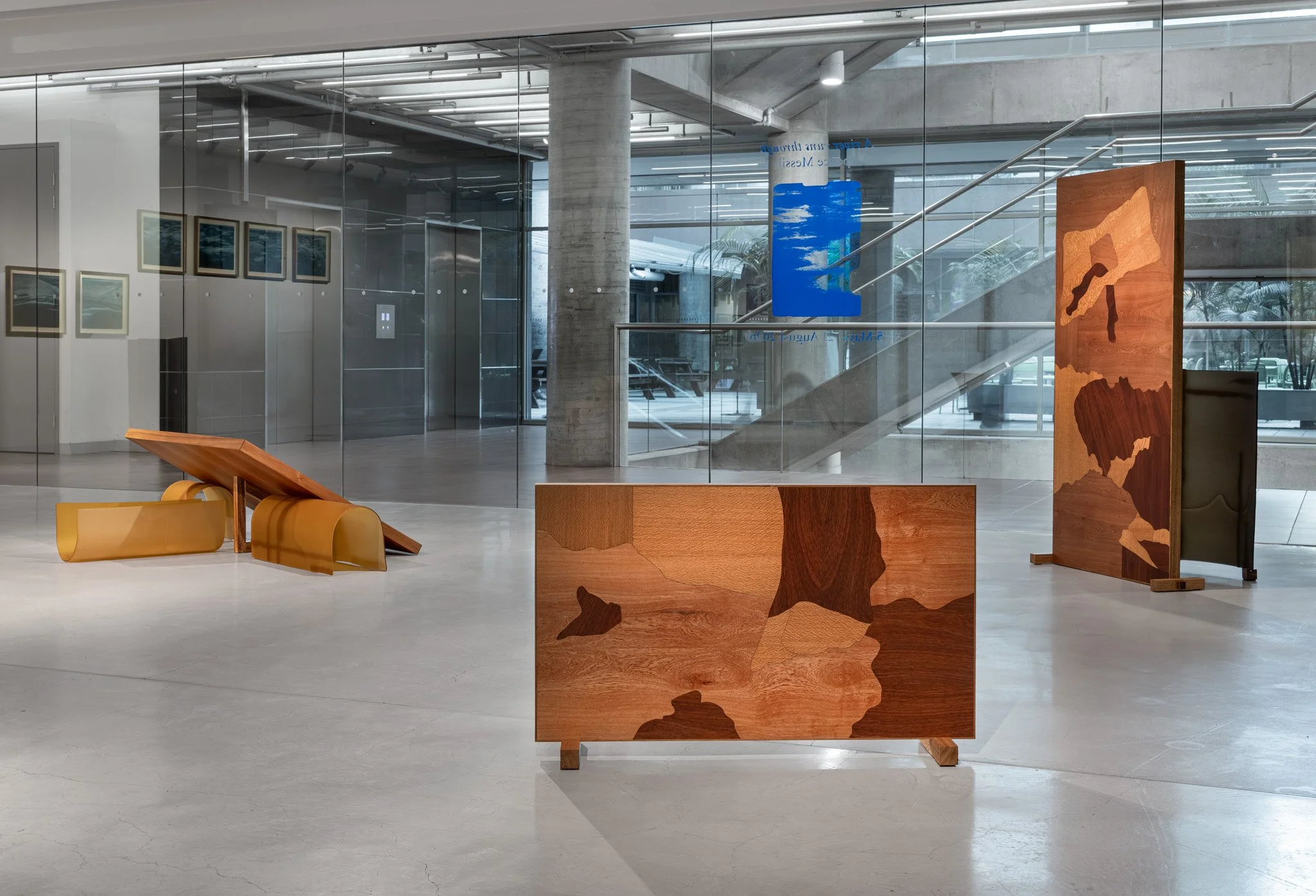
False antithesis IV, V-II and III, 2026, kiln-formed glass, timber marquetry (coachwood, silky oak, jarrah), blackwood, felted feral goat fibre, dimensions variable. Photo: Jacquie Manning
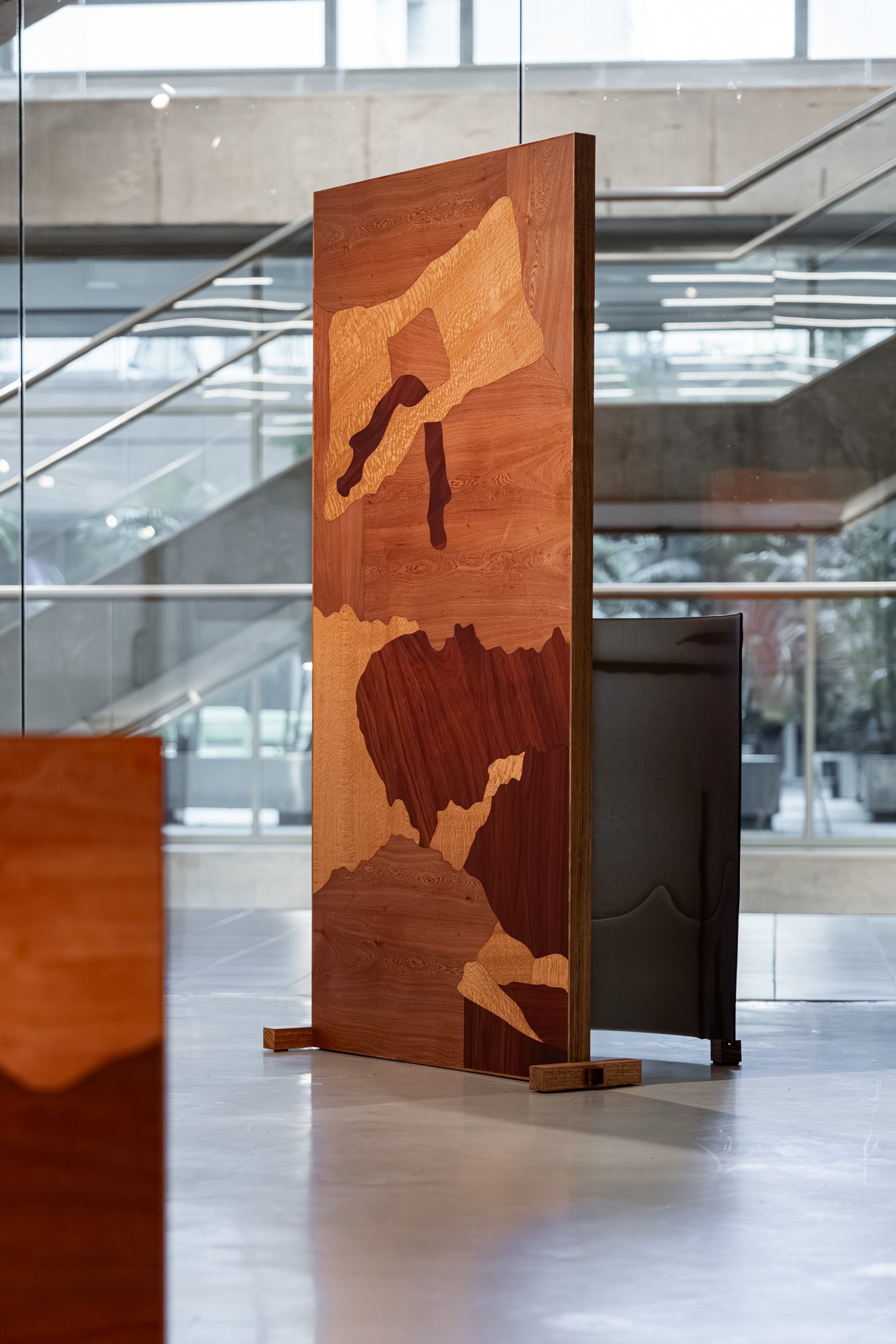
False antithesis III, 2026, kiln-formed glass, timber marquetry (coachwood, silky oak, jarrah), blackwood, dimensions variable. Photo: Jacquie Manning
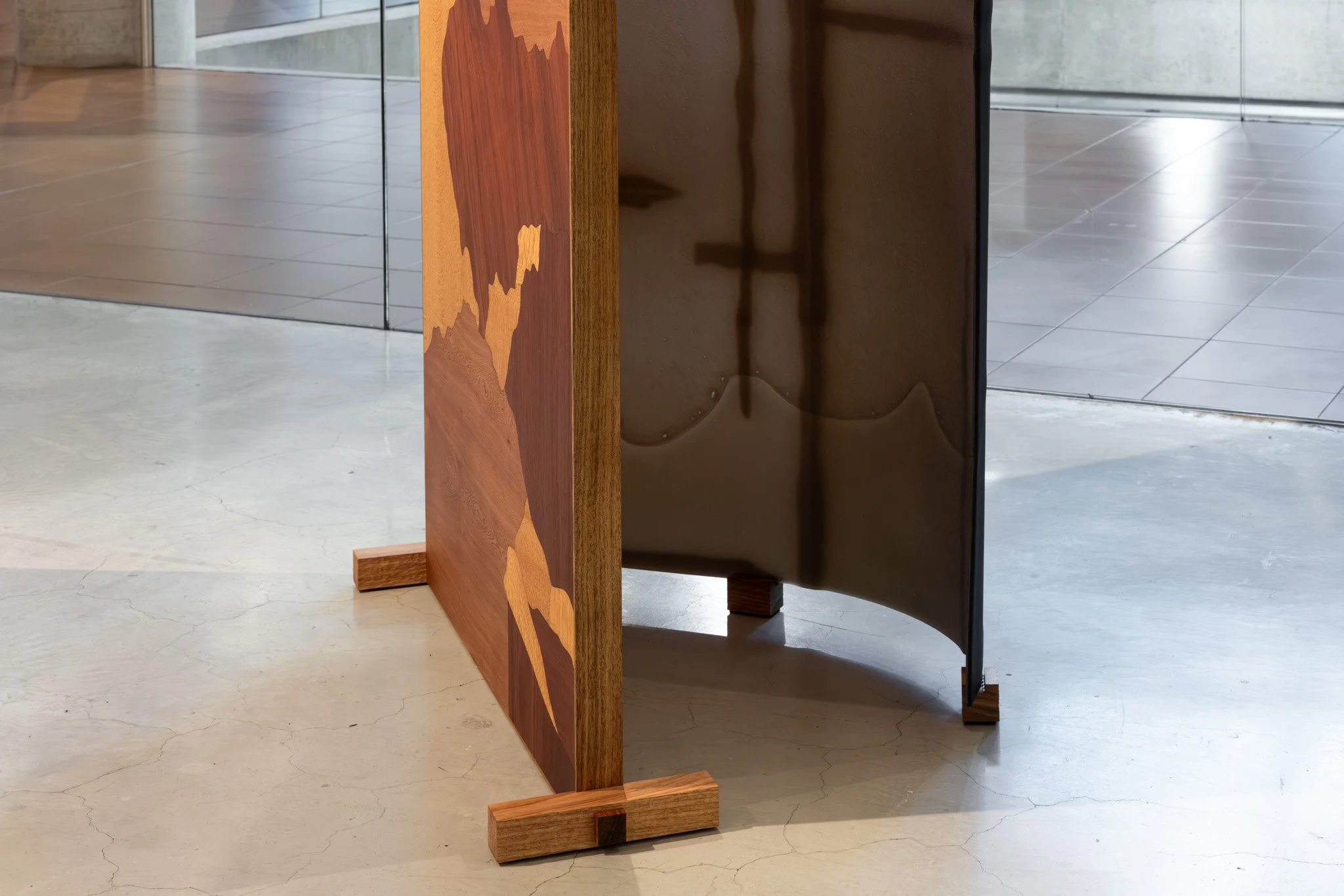
False antithesis III (detail), 2026, kiln-formed glass, timber marquetry (coachwood, silky oak, jarrah), blackwood, dimensions variable. Photo: Jacquie Manning
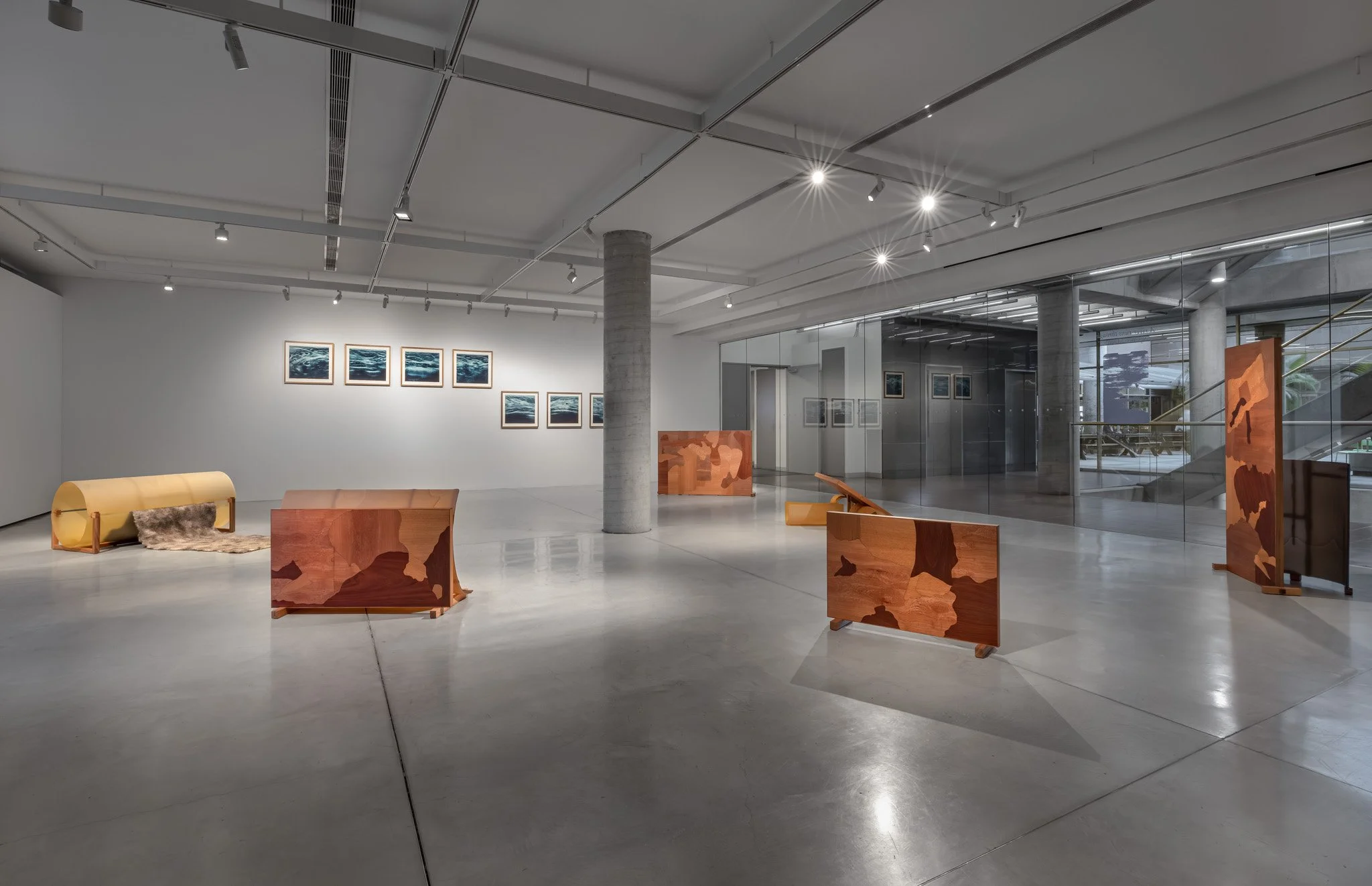
A river runs through, 2026, install view. Photo: Jacquie Manning
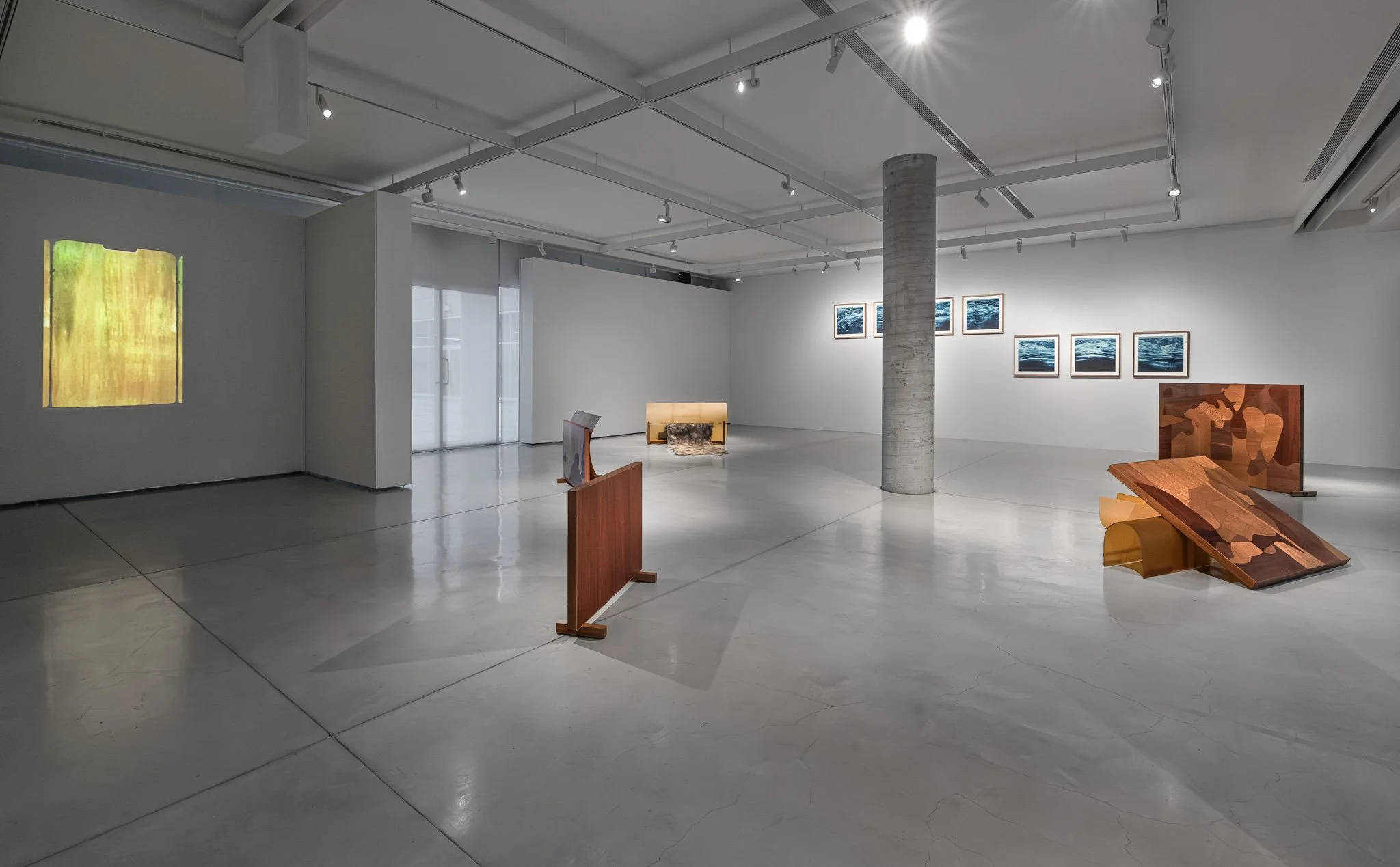
A river runs through, 2026, install view. Photo: Jacquie Manning
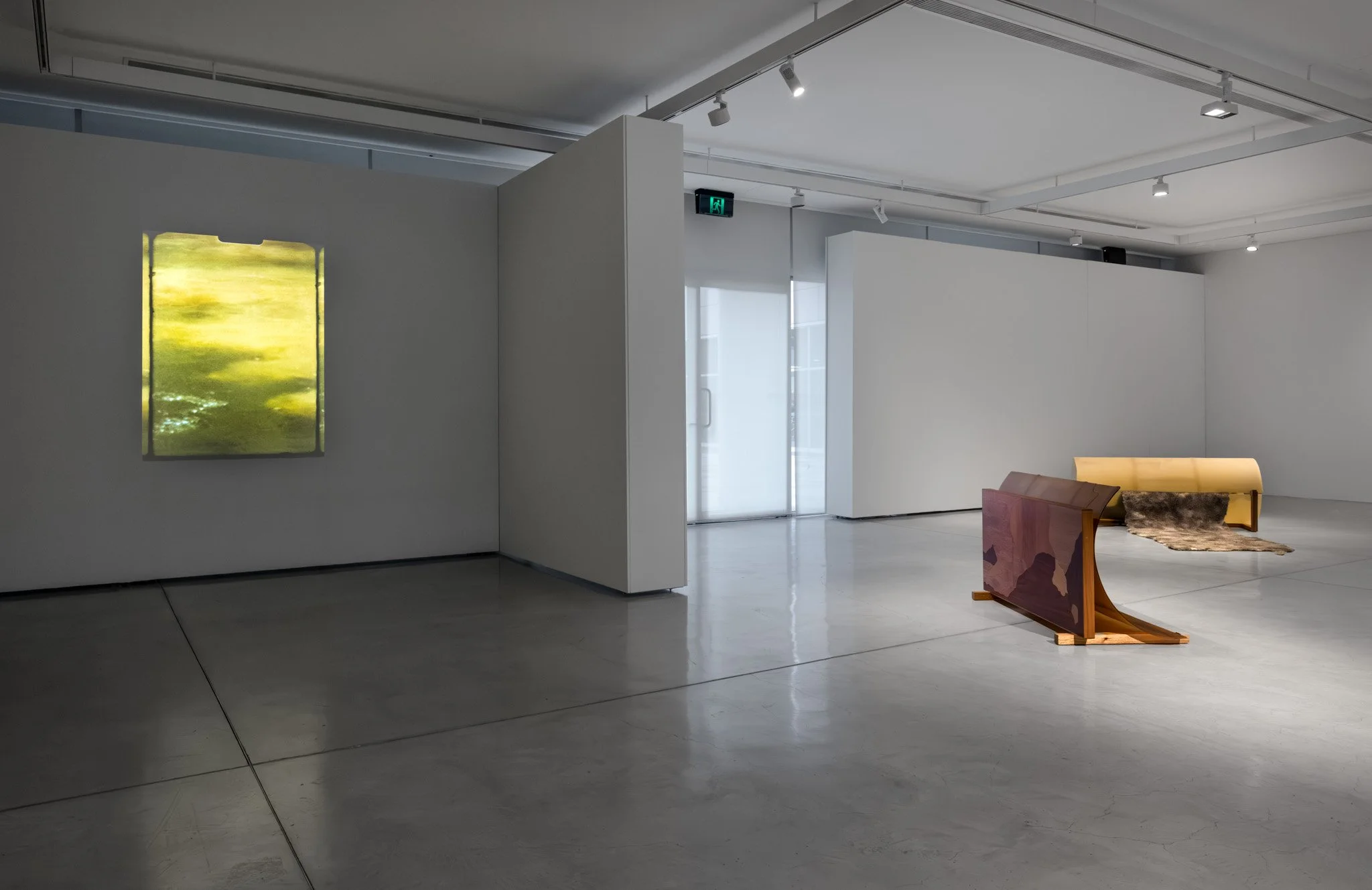
Cell, 2026, digitised Super-8, 5 minutes 15 seconds, continuous loop. Photo: Jacquie Manning (click above image to open video link)
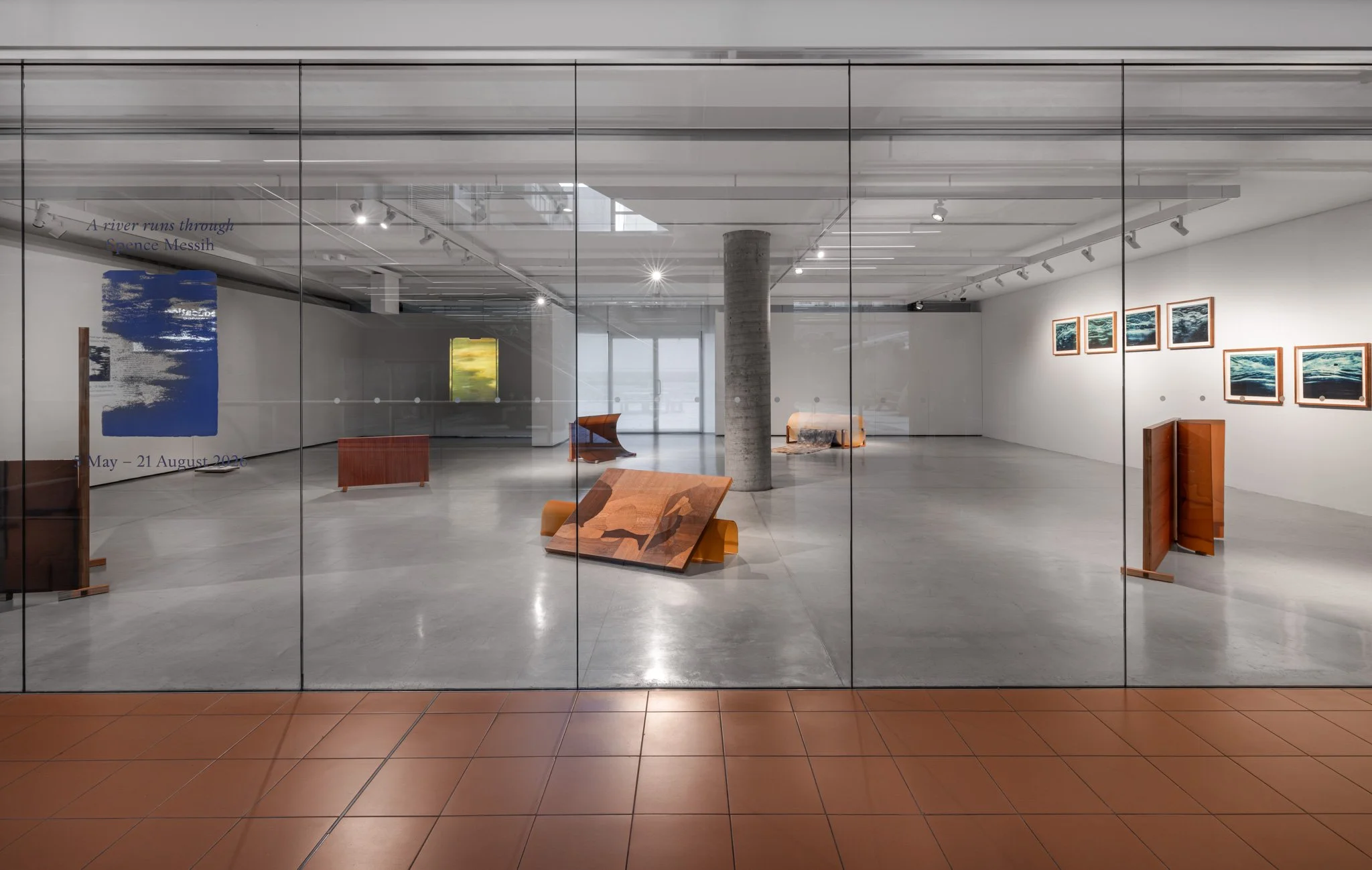
A river runs through, 2026, install view. Photo: Jacquie Manning
A river runs through
5 May — 28 August 2026
UTS Gallery & Art Collection
Curated by Stella Rosa McDonald
View room sheet
View exhibition publication Rival: Stories of gender and water
This project has been assisted by the Australian Government through Creative Australia, its principal arts investment and advisory body and the Canberra Glassworks Artist in Residence Program.
The word ‘rival’ once referred to those who shared a ‘rivus’ (the same water or channel): people whose lives were linked not through conflict but through interbeing. This is not a neat analogy between gender and water, but an invitation to stay with their struggles, their autonomy, and their resistance to being fixed or fully known.
A river runs through presents new works by Spence Messih that trace the intertwined currents of water and gender. Working across sculpture, print, and film, Messih develops a material language shaped by tension, movement and contradiction.
Set against the backdrop of contemporary ‘gender panic’—a climate in which trans bodies are scapegoated to distract from deeper political, social, economic and environmental crises—the exhibition draws parallels between human and ecological vulnerabilities. Both are monitored, categorised and disciplined, and both are shaped by cultural and economic forces that determine who is afforded complexity and who, or what, becomes a subject of fear and control.
By drawing connections between the straightening and exploitation of rivers and the regulation of gender, the works invite us to consider how both resist efforts to be fixed, contained or simplified. Messih’s works turn toward the places where binaries fray, proposing that gender and water are always multiple: cultural and economic, spiritual and historical, lived and inherited, material and symbolic.
Cell, 2026
digitised Super 8
5 minutes 15 seconds, continuous loop
View here
We (Palawa) are Country, Country is us. Country has cared for her people since the time of the Star Brothers who gave form to Palawa, the first Ancestor to walk the earth, and who cut the ground to form Lutruwita. A consequence of names like ‘king’ and ‘queen’ may be the mis-assignment of gender to geographical features, conflicting with the gender assigned through our living lore. Natural places are often gendered feminine. In fact, it is rare to find a masculine river or mountain. This makes sense, given that Ningi Manina (Mother Earth) formed these features.
— Theresa Sainty, Pakana artist, activist and scholar
Filmed at the confluence of the King River and Queen River on Palawa Country in Lutruwita/Tasmania, Cell observes the meeting of two bodies of water shaped by distinct industrial histories. The King River flows from Lake Bunbury through the John Butters Hydroelectric Power Station, while the Queen River continues to carry the effects of contamination leaching from the tailings of the partially decommissioned Mount Lyell copper mine. The Queen River’s copper-orange colour is the opposite of blue, as if a familiar image of water has been inverted. Their merging is described on a sign at the site as “a living unconformity”.
The Super 8 film considers how colonial and gendered forms of abstraction leave enduring marks on ecologies and ways of seeing. Western worldviews often gender ecological resources in ways that render occupation, extraction and exploitation permitted, inevitable, and even justified.
The title, Cell, names a convergence of meanings: the smallest unit of life, the centre of a storm, a unit of water, a site of confinement, and the strip of cellulose used in film.
False antithesis I–V, 2026
kiln-formed glass, timber marquetry (coachwood, silky oak, jarrah), blackwood, felted feral goat fibre
Dimensions variable
Borders of race, gender and power, held up to preserve cultural and economic order, are born of the same extractive forces that shape ecologies. In a moment of converging ecological, social and economic crises, who benefits? Who becomes a scapegoat?
— Spence Messih
False antithesis I–V takes its title from a false dilemma: the insistence to choose between two opposing categories when, in reality, other possibilities exist. Across a sequence of choreographed gestures — yield, push, pull, reach, and grasp — kiln-formed glass and timber marquetry sculptures move between abstraction and figuration.
Marquetry panels incorporate forms sourced from 1950s world and medical encyclopaedias. During this period, the concept of gender emerged as a response to growing anxieties about the instability of binary sex. Gender was framed as a mutable, developmental framework — especially in children — which in turn enabled medical and social interventions aimed at defending a sex binary. By returning to these encyclopaedic sources, Messih explores how dominant worldviews and social norms are created, circulated, and changed, and how culture and economy continually shape and reinforce one another.
Felted feral goat hair, sourced from northwestern New South Wales, where Messih spent time following the Baaka/Paaka/Darling River, nods to the scapegoat, a convenient figure of blame. Large populations of feral goats roam these areas and pose complex environmental and economic dilemmas.
Glass forms resemble digestive tracts, pipes, arteries or water channels — systems of intake, sorting and expulsion. Darker undulating layers evoke gates, pens and other architectures of containment. Sandblasted surfaces resist transparency and recall the gnawing consequences faced by those who attempt to manage their own visibility.
Hiddener abode I–VII, 2025
photopolymer photogravure on 300gsm satin white paper 7–parts
500 × 600mm (each)
The medical gaze reads the body in ways that are incomprehensible to the untrained eye. The undulations, rippling curves, and floating rafts in the prints reflect an ambivalence to being known.
—Spence Messih
This series of photopolymer photogravures are made by transferring ultrasound images of the artist’s body onto industrial photosensitive etching plates. At first glance, the prints resemble waterways, landscapes and sedimentary layers, until sonographic annotations interrupt the images to reveal that we are looking at a medicalised body.
The series title references Karl Marx’s “hidden abode of production”: the site where value is extracted beyond public view. Here, drawing on writer and scholar Jordy Rosenberg’s idea of a hiddener abode, Messih positions the body as a site where labour, surveillance and meaning-making quietly unfold.